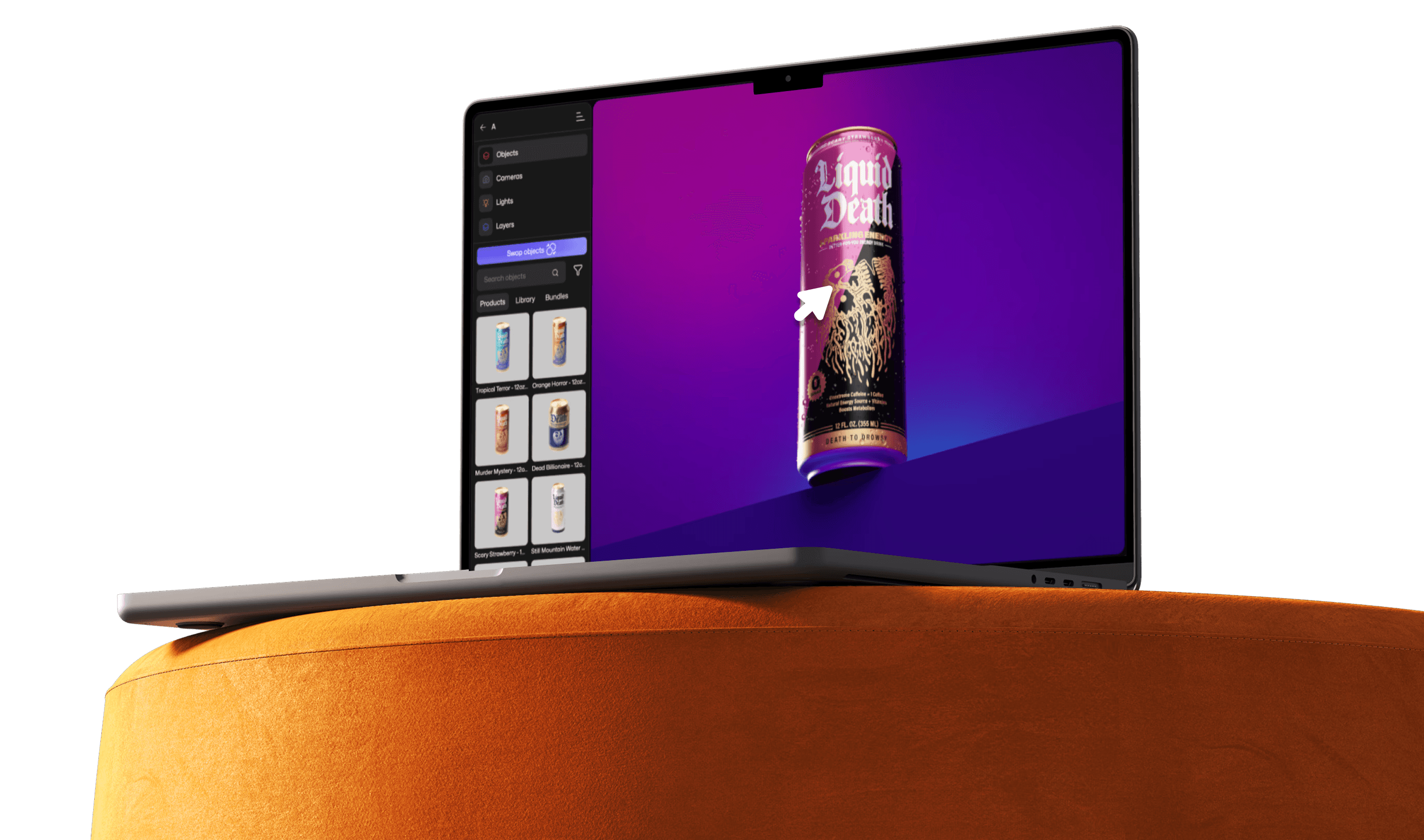
Shiseido: From Global Campaigns to Local Activation

How Shiseido enables local markets to adapt global campaigns faster without compromising the premium brand consistency its portfolio is known for.

About Shiseido
Shiseido is one of the world's leading prestige beauty groups, with a portfolio of globally recognized brands distributed across multiple markets and channels. Within EMEA, regional headquarters is responsible for adapting and deploying global campaigns while keeping them relevant to local market needs, without compromising the premium standards of each brand.
Leading this effort is Manuela Fontan Costa, Senior Creative Director at Shiseido EMEA, who oversees creative production, content adaptation and asset deployment across multiple brands, ensuring campaigns are executed consistently while continuously refining how content is produced and delivered across the region.

Beyond Approval: The Work That Follows a Campaign
For a prestige beauty group with the scale and brand discipline of Shiseido, creative approval marks the beginning of the real complexity, not the end of it. Campaigns are adapted across brands, markets, channels and customer touchpoints, each with its own formats, assortments and local requirements, all while preserving the execution standards that define the brand.
Before adopting Omi, content production relied heavily on traditional design and production workflows. Every asset that needed to be resized, localized or adjusted for a new channel or market required significant manual work from graphic designers and production teams. Product launches and packaging changes were especially demanding: each one triggered a cascade of manual updates across many touchpoints at once, often across several markets in parallel, adding a layer of project management on top of the production work itself.
The challenge was never Shiseido's ability to produce content. It was the ability to produce content at scale, across a growing number of variations, without proportionally increasing production resources or the coordination required to manage them.
"Omi stood out because it combines automation, governance and flexibility in a way that aligns with the needs of a global prestige beauty organization. It allows us to accelerate content adaptation while protecting the visual identity and consistency of our brands," says Manuela Fontan Costa, Senior Creative Director at Shiseido EMEA.

A More Distributed Model for Brand Execution
Rather than expanding central production capacity, Shiseido reconsidered where adaptation work could responsibly take place.
The team launched a proof of concept with selected EMEA markets, giving local digital teams direct access to approved regional HQ assets. Within an established brand framework, markets could adjust product assortments, produce local animations or respond to market-specific digital requirements themselves, rather than routing each request back through regional headquarters. An integrated validation workflow ensures every asset remains aligned with brand standards before it goes live, so the shift extends autonomy without extending risk.
"Markets can respond more quickly to local business opportunities while staying within a controlled brand environment," - Manuela Fontan Costa
Today, this operating model supports a broad range of customer touchpoints, from eCommerce and CRM to product launches, paid and social media, retail communication and localized digital activations. Rather than treating each format or market as a discrete production request, adaptations now begin from approved regional assets within a shared governance framework.

A More Predictable Rhythm of Production
The most meaningful change has not been any single campaign but the cadence of production itself, moving from a request-based production model toward a more structured and repeatable operating model. Recurring adaptations, market-specific requests and seasonal variations no longer generate the same volume of coordination between regional HQ and local teams. Timelines have become easier to anticipate and delivery more consistent across markets, allowing Shiseido to absorb greater campaign volume without expanding the production organization at the same pace.
"The biggest operational change is our ability to scale content production without requiring proportional growth in production resources"" - Manuela Fontan Costa
The shift has also changed how campaigns are planned from the outset. Adaptation is no longer treated as a downstream production challenge to be solved once creative is locked; it is now considered from the earliest stages of the creative process.
"We can now think about content scalability earlier in the campaign planning process rather than treating adaptation as a downstream production challenge," - Manuela Fontan Costa
Results
Time-to-market: Faster adaptation and deployment of recurring visual assets, supporting campaign go-live deadlines
Scalability: Extended from a single-brand pilot to multiple brands, with local market access now piloted for selected EMEA markets
Governance: Integrated validation workflows preserve brand consistency while enabling local flexibility
Operational efficiency: Reduced manual back-and-forth between RHQ and markets on localized needs
Cost predictability: A more controlled production model for high-volume, repeatable adaptations
Building a Model Built to Scale
"Omi has evolved from a content production tool into a scalable content operating model, enabling Shiseido to empower brands and markets while maintaining premium brand governance," Manuela Fontan Costa says.
As demand for personalized, omnichannel content continues to grow, Shiseido has built a content operating model that allows production to scale alongside the business, without requiring production resources to grow at the same pace.