The Content Challenge Behind Gift With Purchase

Why Gift With Purchase (GWP) is exposing the limits of traditional content production.
Gift With Purchase has become one of the most powerful promotional tools in modern commerce.
Whether you're shopping at Sephora, Amazon, Boots, Target or directly from a brand, promotional bundles have become a familiar part of the buying experience. From skincare routines and travel kits to beverage multipacks, electronics accessories and seasonal offers, Gift With Purchase campaigns encourage product discovery, increase basket size and give shoppers another reason to convert today rather than later.
For brands, GWP is no longer an occasional promotional tactic. It's embedded in the commercial calendar, supporting product launches, retailer partnerships, loyalty programs and seasonal campaigns throughout the year.
What has changed isn't the strategy. It's everything required to execute it.
Every GWP campaign now stretches across ecommerce, retail media, marketplaces, CRM, social media, digital advertising and in-store displays. Each touchpoint requires its own formats, specifications and delivery timelines. As promotional calendars become more ambitious, many brands are discovering that the biggest challenge isn't coming up with the next offer. It's producing the content needed to support it.
Promotional calendars never really stop
Ecommerce has fundamentally changed the rhythm of promotional marketing. Product launches now overlap with retailer activations, seasonal campaigns, exclusive bundles and loyalty programmes, often across multiple markets at once. What were once a handful of campaigns spread throughout the year have evolved into an almost continuous promotional cycle.
For consumers, that means more choice, more exclusives and more reasons to buy. For eCommerce, creative and content teams, it means there's almost always another campaign waiting to be produced.
The challenge isn't that brands are launching significantly more products. It's that every product now supports more retailer partnerships, more promotional moments and more localized experiences than ever before. A single SKU may appear in a holiday bundle, a retailer-exclusive offer, a loyalty campaign and a new product launch, each requiring its own PDP imagery, marketplace assets, CRM banners, paid media creatives and social content.
Content production is no longer tied to product launches. It has become an always-on operational function that must keep pace with an increasingly dynamic commercial calendar.
Every bundle behaves like a new product
One of the biggest misconceptions about Gift With Purchase is that the content should be easy to produce because the products already exist.
In reality, every promotional bundle behaves like a completely new SKU. Customers aren't purchasing a collection of individual products. They're responding to a curated offer, and that offer needs its own visual identity.
The product arrangement changes. Packaging evolves. Seasonal sleeves appear. Promotional messaging differs by retailer. Qualifying products vary by market. Even when every component already exists, the combination doesn't.
What appears to be a simple promotion quickly becomes a long list of deliverables: PDP imagery, retailer assets, campaign creatives, CRM banners, marketplace listings, paid social, display advertising and localized versions for every market.
The products themselves may remain exactly the same, but the production workload grows with every new promotion.

Promotional content follows different rules
Core products generally have long lifecycles. Packaging may be refreshed, claims may evolve and formulations may change over time, but the visual identity of a flagship product tends to remain relatively stable.
Promotional content operates very differently. Its value comes from constant renewal. New bundles replace old ones, holiday campaigns give way to back-to-school offers, retailers request exclusive promotions and launch dates shift as commercial priorities evolve.
That continuous change is exactly what makes Gift With Purchase such an effective commercial lever. It's also what makes it so operationally demanding.
Creative teams often begin building campaigns before physical samples even exist. Packaging is still being finalized while ecommerce teams prepare retailer assets and marketing teams plan launch communications. By the time visuals have been photographed, retouched, approved and distributed, the next promotion is already entering production.
Traditional visual production was never designed for that pace.
The hidden cost isn't the photoshoot
When people think about visual production, photography is usually the first thing that comes to mind.
In practice, the shoot itself is only a small part of the process.
The real effort lies in briefing agencies, waiting for packaging, booking studio time, coordinating approvals, exporting retailer-specific assets, localizing content, updating DAM systems and distributing files across markets. None of these activities are particularly difficult in isolation, but together they create an enormous amount of operational overhead.
Multiply that workflow across dozens of brands, hundreds of campaigns and thousands of SKUs, and it becomes clear why even well-resourced organisations struggle to keep pace. The challenge isn't producing one successful campaign. It's keeping every campaign moving without slowing launches, delaying retailer activations or overwhelming creative teams.
Promotional campaigns create visual debt
Every campaign leaves something behind.
New assets are created for one retailer, resized for another, localized for individual markets and adapted for different channels. Some are stored in the DAM. Others live in shared drives, agency folders or personal desktops. Packaging changes, claims evolve and promotions expire, yet many of those files remain in circulation.
Over time, brands accumulate what could be described as visual debt. Teams spend as much time searching for the right assets, recreating missing files and checking whether existing imagery is still compliant as they do producing new content.
The problem isn't simply volume. It's that every new campaign adds another layer of complexity to an already fragmented content ecosystem.

Why global consistency breaks down
Most brands invest heavily in centralized content production. Global teams define visual guidelines, create approved templates and distribute assets through DAM platforms so every market starts from the same source of truth.
In practice, however, commercial timelines rarely wait for centralized production.
When local teams can't get updated assets quickly enough, they naturally find their own solutions. Existing campaign visuals are repurposed for PDPs, products are manually composited into promotional bundles and retailer imagery is adapted locally to meet launch deadlines.
These workarounds are rarely the result of poor governance. They're the result of competing priorities. Getting a campaign live often matters more than waiting another week for approved content.
Over time, though, those small compromises begin to accumulate. The same promotion looks different across retailers, marketplaces and regions, making consistency increasingly difficult to maintain while creating even more work for central teams.
Rethinking promotional content production
Leading brands are beginning to ask a different question.
Instead of looking for ways to produce promotional assets faster, they're asking why every promotion still starts from scratch.
That shift changes the conversation from production capacity to production systems. This is where Digital Twins fundamentally change the workflow.
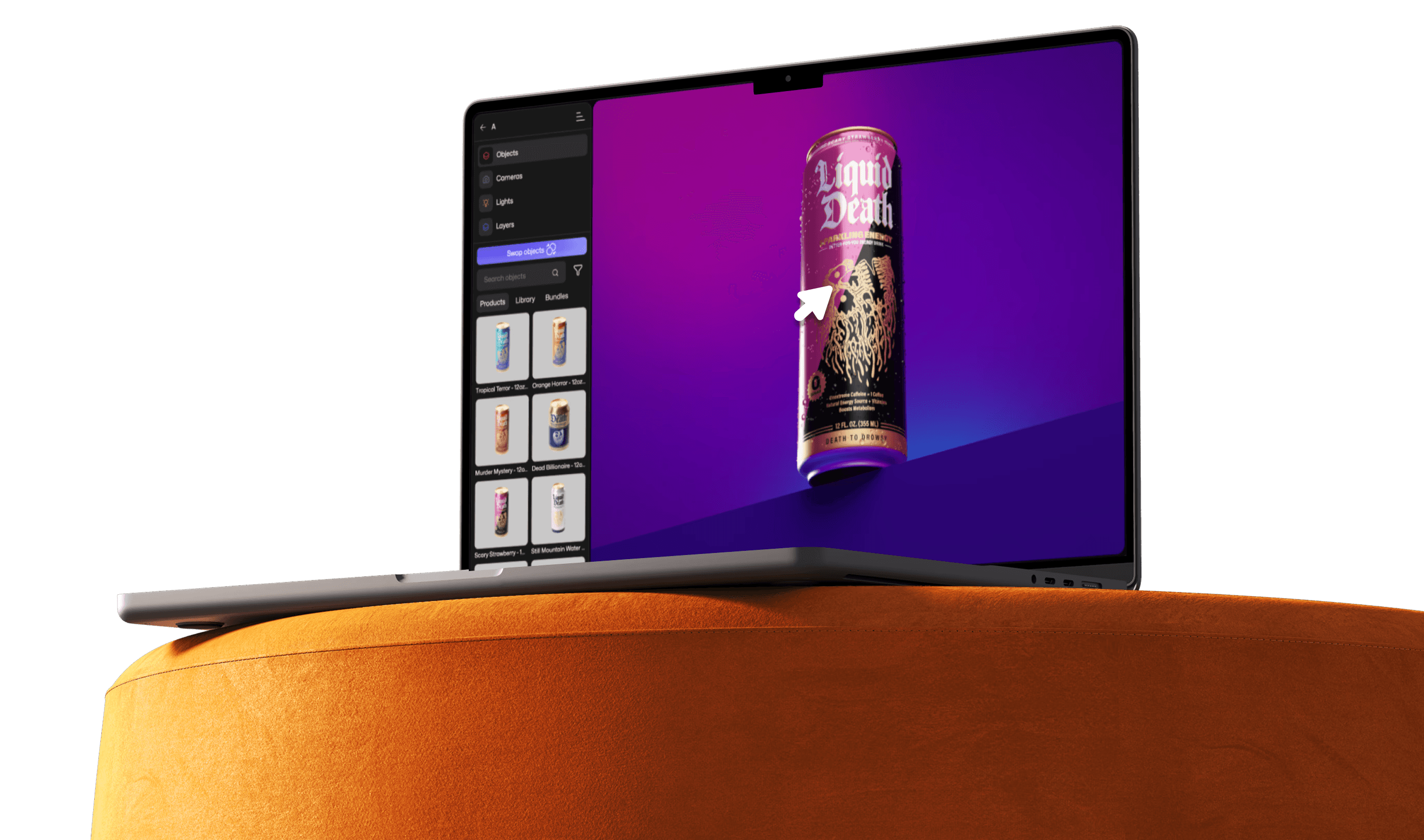
Rather than waiting for physical products to arrive in a studio, brands begin with a photorealistic digital replica of every SKU. Promotional bundles can be assembled digitally, retailer-specific assets generated on demand and campaign visuals adapted across channels without repeating the same production process every time marketing launches a new offer.
A holiday bundle no longer depends on physical samples. A retailer-exclusive promotion doesn't require another photoshoot. PDP imagery, CRM banners, marketplace assets and paid media creatives can all be generated from the same approved product source while maintaining consistency across every touchpoint.
The result isn't simply faster production. It's a content operation built to scale with the commercial calendar instead of constantly trying to catch up.
Gift With Purchase isn't slowing down
Retailers continue to invest in exclusive promotions. Brands are expanding loyalty programmes, increasing the frequency of limited-edition offers and creating increasingly personalized campaigns to drive conversion.
Gift With Purchase isn't becoming more complex because marketers are asking for too much. It's becoming more complex because traditional production workflows were never built for today's promotional cadence.
The brands that will gain a competitive advantage won't necessarily be those running the most campaigns. They'll be the ones that build content operations capable of supporting them without adding complexity every time a new promotion launches.
Because the real challenge has never been creating the next Gift With Purchase.
It's building a visual production system capable of supporting the next hundred.