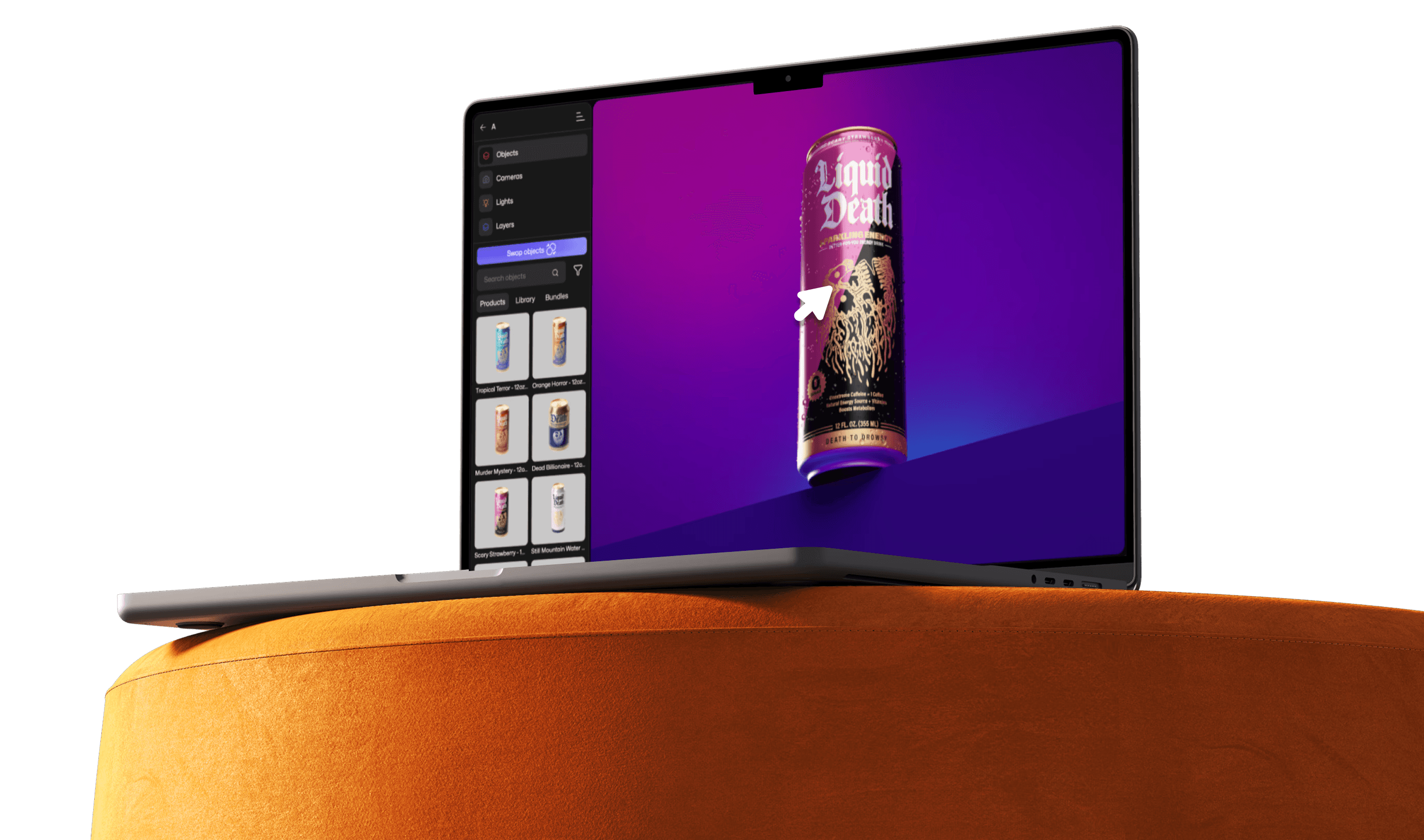
A New Model for Pharma & Dermo-Cosmetics Visuals
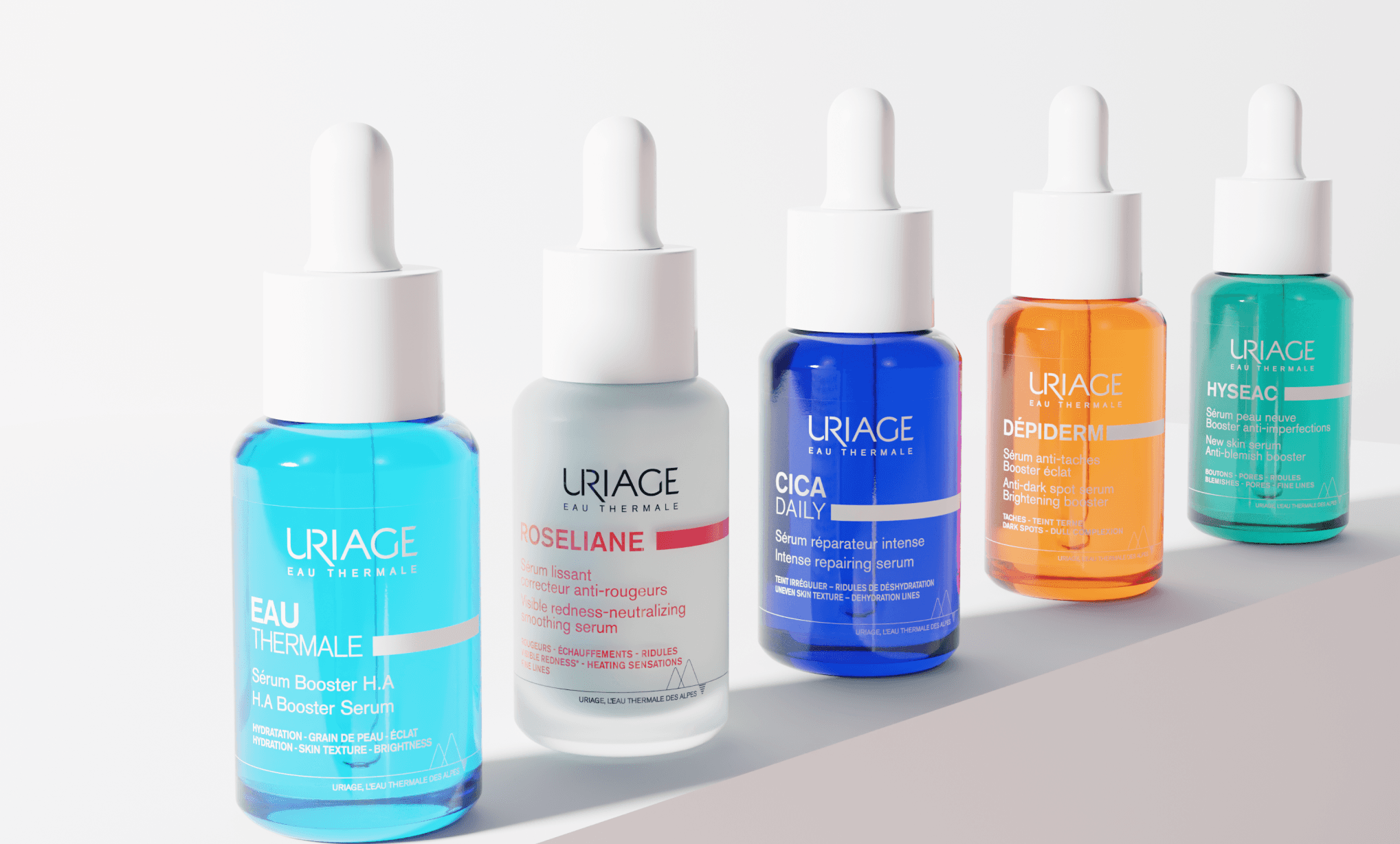
Visuals are not just assets. They carry product and brand truth.
In pharma and dermo-cosmetics, product visuals do more than illustrate. They represent the product itself, in regulated contexts, but also across every customer touchpoint.
Every detail matters. The exact label. The correct dosage. The right claims for the right market.
But also: the texture of a serum, the finish of a bottle, the perception of quality on a PDP or in a campaign.
Whether it’s a blister pack, an injectable device, a skincare tube, a pump, or a translucent gel — there is no room for approximation.
At the same time, these visuals are required everywhere: regulatory dossiers, HCP materials, training, eCommerce PDPs, retailer platforms, CRM campaigns, paid ads, social media, and in-store displays.
The expectations are high. The production model hasn’t caught up.
A system built on repetition cannot scale
Most teams still operate on a linear model: wait for the physical product, organize a shoot, process the outputs, adapt them for each market, and repeat.
For every variation. A new dosage. A packaging update. A localization change. Each one triggers another cycle.
At small scale, this is manageable. At pharma scale - across SKUs, markets, and regulatory constraints - it becomes a structural limitation.
Timelines stretch, dependencies increase, and with every new iteration, the risk of inconsistency grows.
A label slightly off, a version reused incorrectly, a mismatch between markets. These are not edge cases. They are systemic outcomes of the process itself.
The real issue is not speed, it’s control
The industry doesn’t have a creation problem. It has a control problem.
When visuals are produced independently, there is no reliable way to guarantee that every output reflects the exact same product definition. Each file becomes its own version of the truth.
And the more outputs you generate, the harder that becomes to manage.
This is where scale introduces risk.
Pharma today sits at the intersection of regulation and brand
In dermo-cosmetics and consumer health, visuals must do two things at once:
strictly reflect the approved product (formulation, labeling, claims)
meet the standards of modern brand expression across digital and retail channels
The same product needs to exist as:
a compliant representation for regulatory and medical contexts
a high-performing visual for eCommerce, CRM, and paid media
This dual requirement is where most production models break.
From production to product-based systems
What is emerging instead is a shift in how visuals are structured.
Rather than producing assets one by one, teams start with the product itself.
A precise, photorealistic digital model built from technical specifications and validated references — capturing geometry, materials, finishes, and labeling exactly as approved.
Not an approximation. A controlled representation.
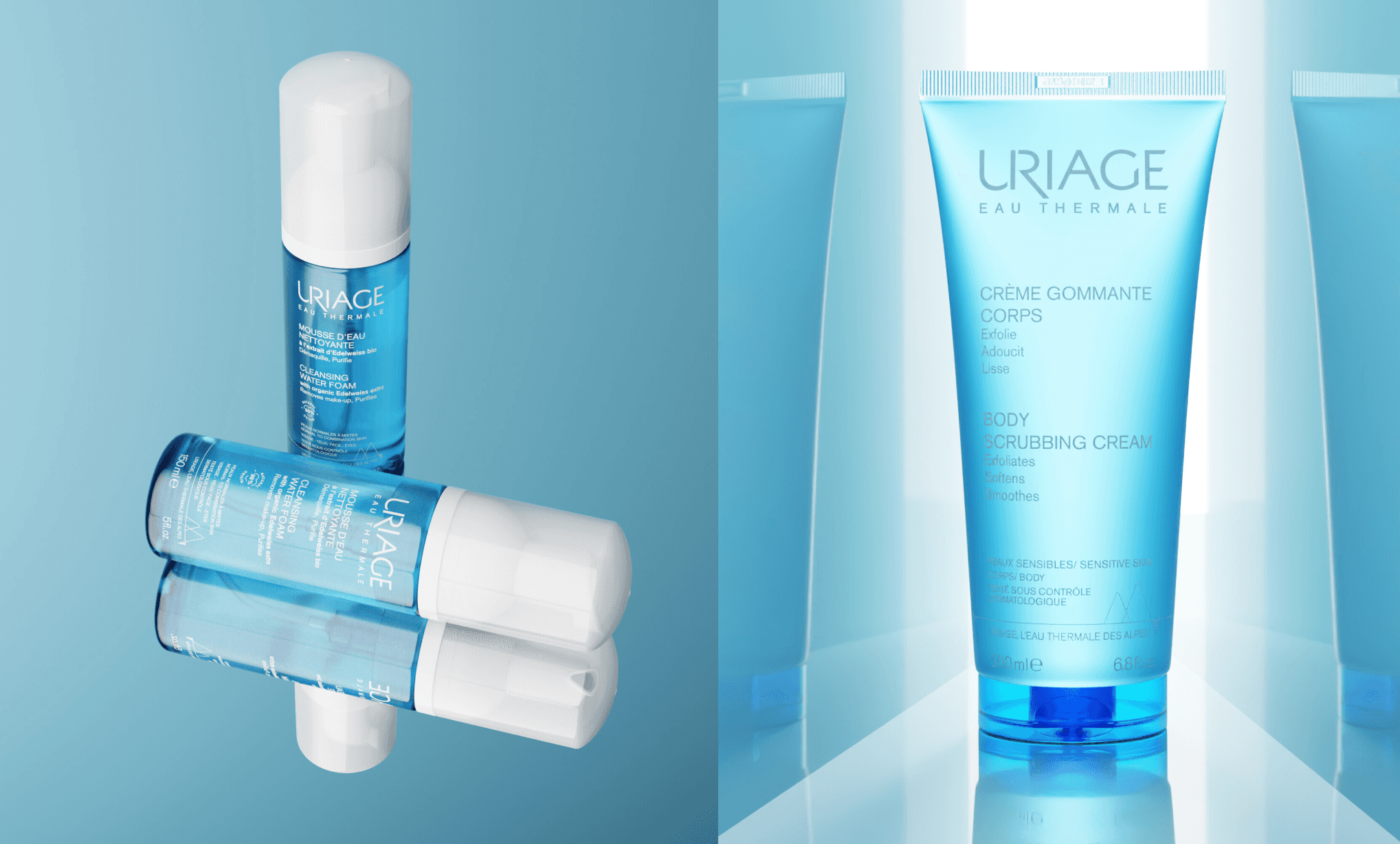
This includes elements that are traditionally difficult to capture consistently through photography: reflective blister packs, translucent gels, syringes, complex delivery devices.
From there, every visual is generated from that single source.
What this unlocks
Commercial teams move faster without compromising compliance
eCommerce, CRM, and paid teams can generate on-brand visuals instantly, while staying anchored to the same validated product definition used across regulatory and medical contexts.
One product, multiple markets
Regulatory, medical, and commercial visuals can all be generated from the same source of truth.
Each version reflects the correct language, dosage, claims, and packaging - without recreating assets.
Faster product rollouts
New SKUs, generics, and line extensions no longer require starting from scratch. A base product can generate multiple variants instantly, with full control over every component.
Operational localization
Adapting visuals for different markets becomes a structured process - not a production bottleneck.
Decoupling from physical constraints
Visuals are no longer tied to samples or photoshoots. They can be created ahead of manufacturing - enabling earlier submissions, faster launches, and better alignment across teams.
Consistency becomes systemic
This drastically changes how teams work. Updates are applied once and reflected everywhere and versioning is controlled by default. Teams are no longer reconciling multiple files across regions. They are working from a single, validated reference.
Consistency is no longer enforced downstream. It is built upstream.
For pharma organizations operating across multiple markets and regulatory frameworks, this removes a significant layer of operational complexity.
A shift that doesn’t look like one
From the outside, nothing changes. The outputs still look like high-end photography - often indistinguishable from it.
But underneath, the model is fundamentally different. Visuals are no longer tied to production cycles. They are anchored to the product itself.
Where this is heading
This shift is already underway in industries where accuracy is non-negotiable.
In pharma, it is taking shape through 3D Digital Twins - precise, photorealistic product models that serve as the reference point for every visual output.
Platforms like Omi are built around this approach, allowing teams to generate compliant, market-ready visuals from a single product foundation - across submissions, training, and commercial use.
Not by producing faster, more by removing the need to recreate.
This is the shift
One product.
Multiple markets.
Multiple channels.
No divergence.