Product Imagery: The Engine Behind Modern Commerce

Product imagery has become one of the most powerful drivers of modern commerce.
Every product launch, eCommerce PDP, marketing campaign, and retail partnership depends on visuals. From product pages and paid ads to marketplaces and social media, imagery is often the first and most influential interaction a customer has with a product.
At the same time, the demand for visual content has increased dramatically. Brands are expected to produce more assets, across more channels, and at a faster pace than ever before.
Yet the way most brands create product imagery has barely changed. Many still rely on traditional photoshoots as the backbone of visual production - a model that was designed for a much slower marketing environment.
As a result, marketing teams are increasingly caught between the growing demand for visual content and production workflows that struggle to keep up.
What Is Product Imagery?
Product imagery refers to the visual assets used to present a product across digital and physical channels.
This includes:
eCommerce product photography
lifestyle and campaign visuals
social media content
marketplace product images
email and CRM visuals
retail and in-store assets
advertising creatives
In eCommerce environments, visuals often determine whether customers continue exploring a product page or abandon it. High-quality imagery communicates product quality, brand identity, and trust within seconds.
For this reason, product imagery is no longer simply a creative output - it is a core component of the customer experience.

Why Product Imagery Has Become a Production Bottleneck
The biggest challenge facing marketing teams today is not creativity. It's scale.
A single product launch can require visual assets across dozens of formats and platforms. eCommerce pages, paid ads, marketplaces, social media, CRM campaigns, and retail partners all require their own versions of product imagery.
In practice, one product may require 50–100 visual assets once all channels and variations are considered.
Traditional photoshoots struggle to support this level of demand. They require planning, studio time, photographers, and production teams, often weeks in advance. Once the shoot is complete, adapting visuals for new campaigns or markets typically requires organizing another production cycle.
As marketing calendars accelerate and channels multiply, these constraints become increasingly visible.
Teams experience:
slower campaign launches
limited ability to test creative variations
inconsistencies between regions and channels
growing production costs
The result is that visual production becomes a bottleneck for marketing execution.
How Brands Are Scaling Product Imagery
To address this challenge, many brands are moving toward more scalable visual production models.
Instead of creating imagery through individual photoshoots for each campaign, brands are building digital product foundations that allow visuals to be generated continuously across formats and channels. This shift changes the production workflow significantly.
Rather than producing a fixed set of images, teams can create multiple visual outputs from a single product source. eCommerce packshots, social media visuals, campaign imagery, marketplace formats, and localized variants can all be generated from the same product base.
This approach allows marketing teams to respond more quickly to campaign needs while maintaining consistent product representation.
How 3D and AI Are Transforming Product Imagery
One of the key technologies enabling scalable visual production is the combination of 3D modeling and AI-assisted content generation.
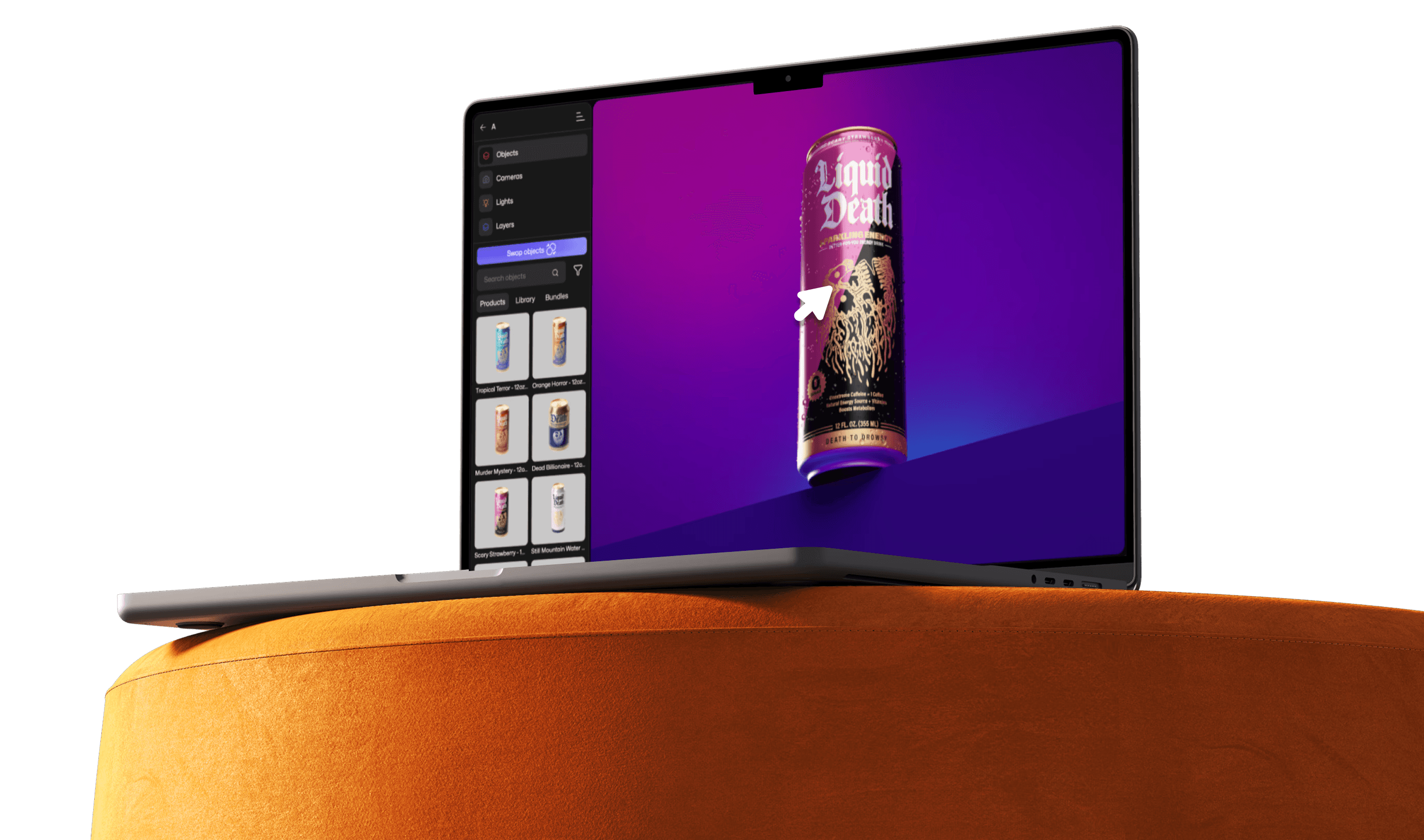
Instead of repeatedly photographing a product, brands can create a photorealistic 3D model of the product, commonly referred to as a Digital Twin.
Once this digital replica exists, it can be used to generate product imagery across a wide range of contexts. Packshots, lifestyle visuals, campaign scenes, and marketplace assets can all be created without organizing additional photoshoots.
For marketing teams, this approach offers two significant advantages: speed and consistency. New visual assets can be generated quickly, while maintaining accurate product representation across every channel.
Platforms such as Omi enable brands to create these Digital Twins and use them to generate large volumes of campaign-ready visuals across ecommerce, social media, and marketing channels.
The Strategic Advantage for Marketing Teams
When product imagery becomes easier to generate and adapt, marketing teams gain significantly more flexibility.
Campaign visuals no longer depend entirely on production calendars. Teams can create new assets when campaigns require them, rather than waiting weeks for additional photoshoots.
This flexibility allows brands to:
launch campaigns faster
test more creative variations across ads and landing pages
localize visuals for multiple markets
maintain consistent product representation across channels
In practice, scalable product imagery transforms visual production from a constraint into a strategic advantage.
The Future of Product Imagery
The demand for visual content will continue to increase as commerce becomes more digital and more visual.
New platforms, formats, and campaigns will require brands to produce more imagery than ever before. At the same time, marketing teams will need to move faster and adapt content more frequently.
For this reason, many organizations are investing in digital product foundations that allow them to generate imagery quickly and consistently.
In this emerging model, product imagery becomes more than a set of marketing assets.
It becomes the visual infrastructure behind modern commerce.
Frequently Asked Questions About Product Imagery
What is product imagery ?
Product imagery refers to the images and visual assets used to present a product online and offline. This typically includes product photography, lifestyle images, close-ups, and contextual visuals that help customers understand the product before purchasing.
Why is product imagery important ?
High-quality product imagery improves customer trust, increases engagement, and directly influences conversion rates. In online retail environments where customers cannot physically interact with products, visuals play a crucial role in the buying decision.
What is AI product photography?
AI product photography refers to the use of artificial intelligence and digital production tools to create product visuals without relying entirely on traditional studio photoshoots.
In some cases, AI generates images from prompts or reference photos. In more advanced workflows, brands create a precise digital version of the product, often called a Digital Twin, and use the scale of AI and the accuracy of 3D to generate visuals across different scenes, formats, and marketing channels.
What is a Digital Twin for product imagery?
A Digital Twin is a photorealistic 3D model of a product that can be used to generate visual assets. Once created, the Digital Twin allows brands to produce ecommerce images, campaign visuals, and marketing content without repeatedly photographing the product.