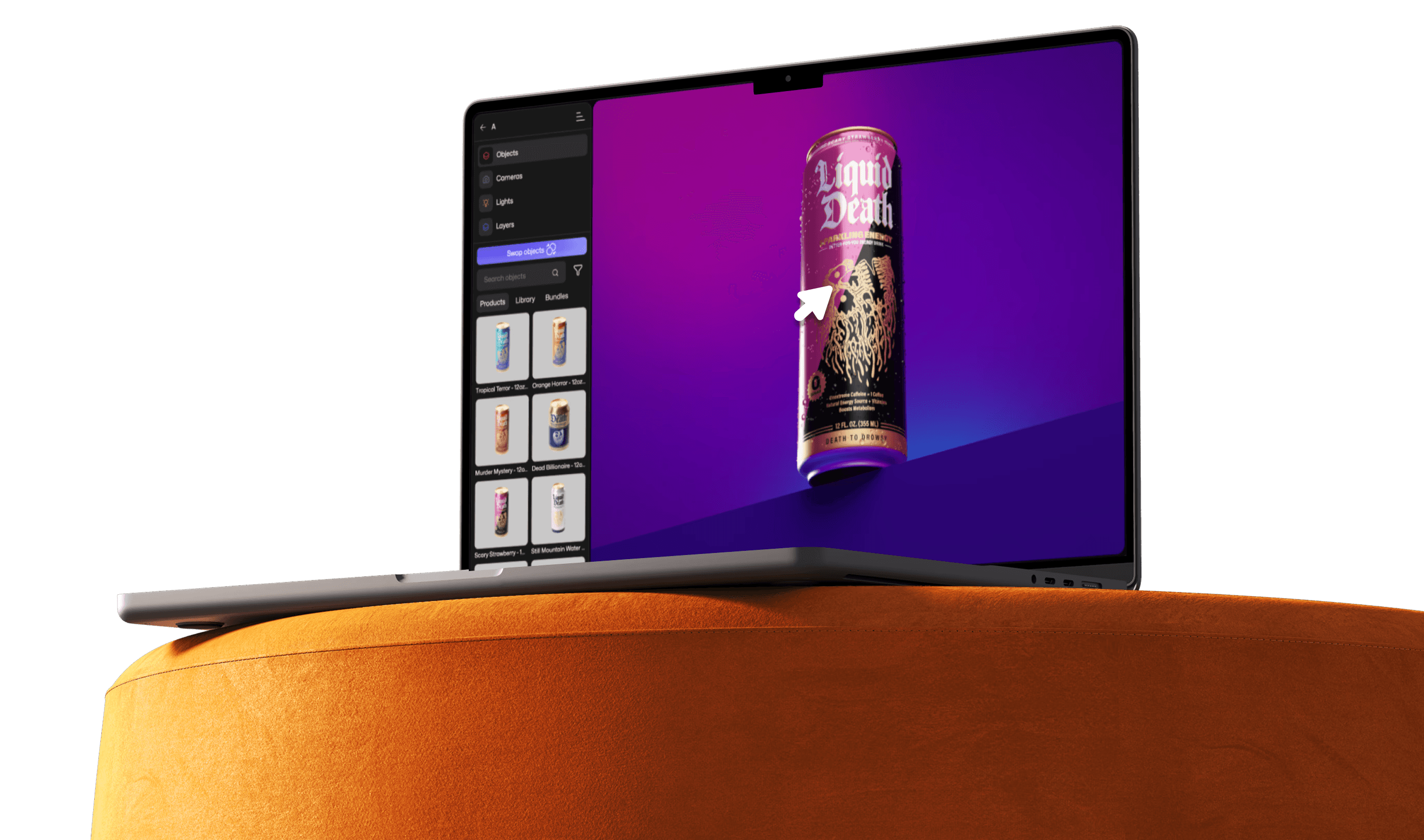
Print Assets Without Compromise: From Digital Twin to Reality
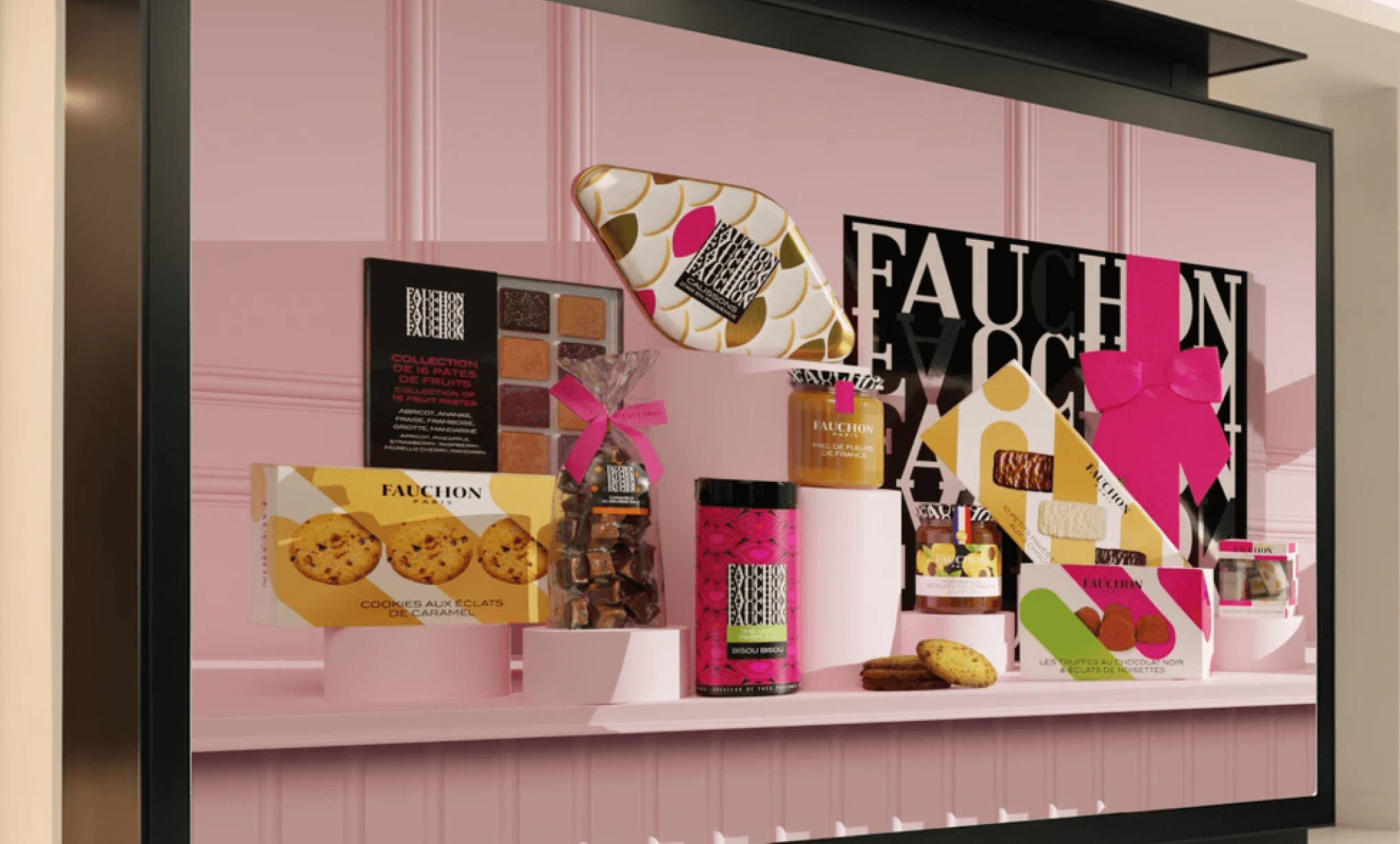
Pixel-perfect. At any scale.
A customer walking through Times Square doesn't know whether a visual came from a photoshoot, a render, or an AI-generated image.
They don't care. What they notice is whether the brand feels premium.
The same is true when they pass a storefront window on a luxury shopping street, stop in front of a retail display or walk through an airport terminal lined with advertising. They aren't evaluating how the visual was produced. They're forming an impression of the product itself.
Does it feel premium? Does it feel trustworthy? Does it look like a product worth picking up, trying or buying?
Those judgments happen remarkably quickly. Long before someone reads a product description, visits a website or speaks to a sales representative, they have already formed an opinion based on what they see.
This is why physical brand experiences remain so important. They are often the closest thing a consumer has to experiencing the product itself.
And unlike digital channels, they are unforgiving. A social ad disappears with a swipe. A website can be updated tomorrow. An email campaign is quickly forgotten. But a retail display, a trade show booth, a storefront window or a billboard sits in the real world for weeks or months at a time, exposed to scrutiny from every angle.
The visual isn't simply supporting the brand in those moments. The visual becomes the brand.
Which is why print remains one of the clearest tests of a product visual's quality.
Not because print is old-fashioned. Because it forces a visual to perform outside the controlled environment where it was originally created.
Large formats, natural lighting, physical materials, real-world viewing distances - these environments reveal details that often go unnoticed on a screen. Packaging textures, typography and product finishes become visible.
The larger the surface, the smaller the margin for error. And this is precisely where many production workflows begin to show their limitations because what gets approved is often not what ultimately gets produced.
A visual designed for a screen is pushed into an entirely different environment. RGB becomes CMYK and web resolution becomes large-format production. Assets are resized, reformatted, adapted, and re-exported.
Somewhere in that transition, precision is often lost - Colors drift, details soften, files multiply. Teams spend time fixing things that were never meant to change in the first place.
The issue isn't execution, it's the foundation. If a visual wasn't designed to survive every destination it needs to reach, no amount of production work can completely eliminate that risk.
From screen to everywhere
The challenge is becoming more apparent because brands are creating more content than ever before.
A product launch no longer consists of a handful of hero images and campaign assets.
Today, a single launch might require visuals for retailer PDPs, marketplaces, paid media, social campaigns, CRM, retail displays, sales materials, trade shows, distributor catalogs, window installations, and out-of-home advertising. The number of outputs continues to grow and the time available to create them continues to shrink.
At the same time, product teams increasingly need assets before inventory even exists. Packaging updates need to be reflected across channels immediately, retailers want launch materials weeks before products arrive on shelves, and event teams need booth graphics while final production is still underway.
The expectation is no longer to create great visuals. The expectation is to create them once and deploy them everywhere. Yet many workflows still treat digital and physical environments as separate worlds.
A visual gets approved for digital use and then a second process begins to prepare it for print. New files are created, new exports are generated, production requirements are reviewed and different teams become involved. The visual enters a cycle of adaptation that can continue long after creative approval has been given.
Most of this work isn't creative. The product, packaging and the story aren't changing. The effort comes from moving the same product representation between different environments without losing accuracy along the way.
This is where a 3D Digital Twin becomes particularly powerful.
When every visual originates from the same precise product representation, teams stop creating separate versions of the product for every destination. Instead, they generate outputs from a common source.
Pixel-perfect. Print-perfect.
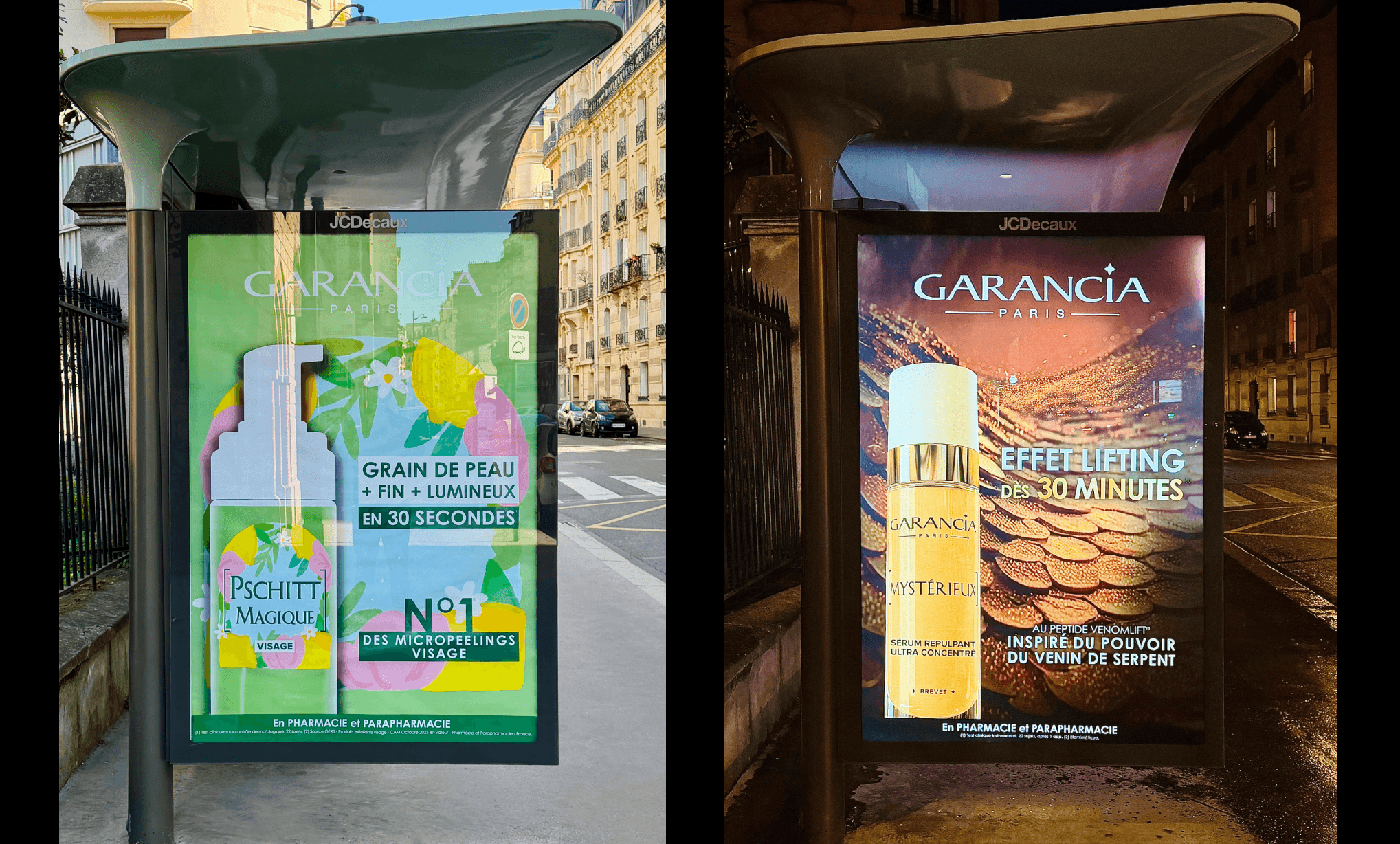
This is where the difference becomes visible. Not inside the software. Not during a creative review. In the real world.
Take the same visual and place it across different channels: A billboard needs to remain impactful at scale while preserving the details that make the product feel premium. A retail display needs to withstand close inspection, where packaging, typography, textures, and finishes suddenly become far more noticeable. Event graphics need to remain crisp across large surfaces while supporting an entire brand experience.
Yet despite these differences, the expectation remains remarkably simple. The product needs to look exactly as it should. Not one version online and another version in store. Not one version approved by the brand team and another version produced by a printer.
The same product. The same packaging. The same identity.
This is often where traditional workflows begin to struggle. Every new format introduces another opportunity for interpretation. Assets are exported multiple times. Versions multiply. Production teams adapt files to fit different requirements. Over time, small changes begin to accumulate.
Most of these changes are subtle. A slightly different color profile, a packaging update that wasn't reflected everywhere, a version created for one market that finds its way into another.
Individually, these issues may seem insignificant. Collectively, they create inconsistency.
And consistency is one of the few things customers notice immediately, even if they cannot explain why.
The strongest brands rarely feel fragmented. Whether you encounter them on a shelf, in a store, at an event, or on a billboard, they feel cohesive. Every touchpoint reinforces the same perception.
This is what pixel-perfect means in practice. Not simply creating a beautiful visual but creating a visual that remains accurate and trustworthy wherever it appears. Because ultimately, customers don't experience products through file formats, production workflows, or creative tools.
They experience them through moments. And every one of those moments contributes to how the brand is remembered.
Control is the advantage
For years, print introduced uncertainty into the content production process.
Not because print itself was problematic but because it often sat outside the systems used to create the original visual.
The visual would move through multiple hands before reaching its final destination. The more channels a brand supported, the more complex that process became.
Today, the challenge is even greater. Brands are expected to support more formats, more campaigns, more markets, and more customer touchpoints than ever before.
In that environment, control becomes increasingly valuable. Not control over creativity but more like control over consistency.
Control over how a product is represented as it moves between teams, channels, markets, and physical environments. This is one of the reasons Digital Twins have become such an important foundation for modern content production.
When every visual originates from the same precise product representation, there is less room for interpretation. The website image, the retailer PDP, the trade show graphic, the storefront display, and the billboard are no longer separate creations. They are outputs of the same source.
That distinction fundamentally changes the role of print.
Instead of recreating assets for physical environments, teams can focus on defining how those assets should be produced. This is the thinking behind Omi's print capabilities.
The goal is not simply to export larger files. It is to remove the gap that traditionally exists between the visual that was approved and the visual that ultimately appears in the real world.
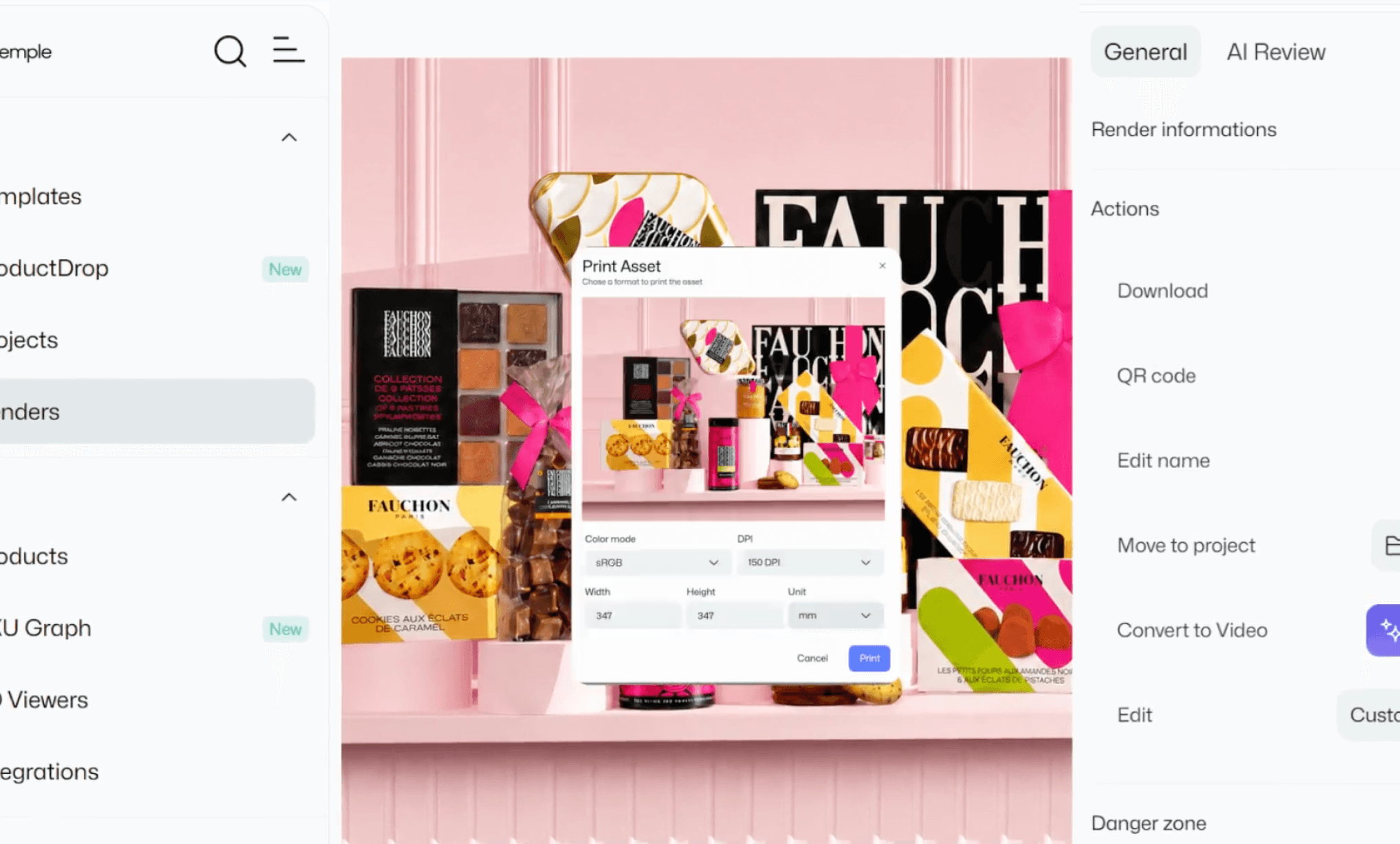
With Omi’s Advanced Export, teams can generate ultra-high-resolution renders directly from the same Digital Twin used across digital channels, configure CMYK color profiles for print production, define precise dimensions for any format, and move from screen to physical environments without rebuilding assets along the way.
The product remains consistent. The visual remains consistent.
Only the destination changes. And perhaps that's the real promise of modern content production.
Because when every touchpoint originates from the same foundation, what leaves the screen is exactly what arrives in the world.
Pixel-perfect. Print-perfect.